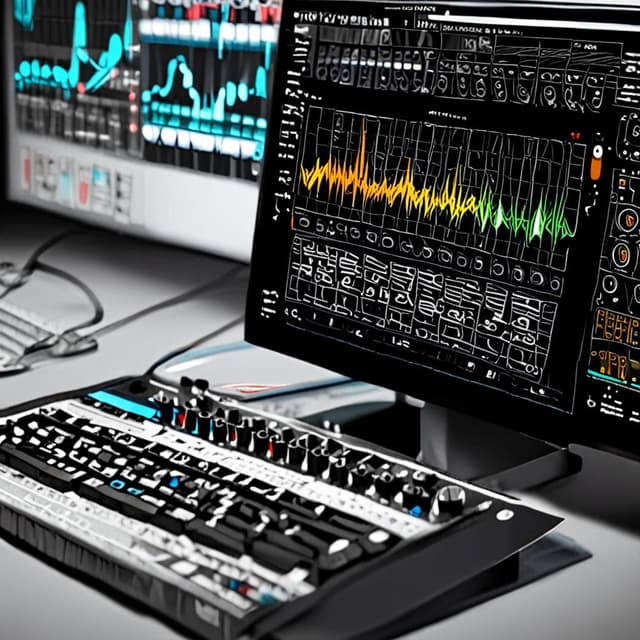
| Field | Extrapolative Audio Engineering |
| Focus | Sound synthesis • Sampling • Sound design |
| Status | Niche field with small but dedicated following |
| Description | Emerging field exploring experimental, forward-looking soundscapes and musical compositions using innovations in areas like algorithmic composition, neural networks, and quantum computing |
| Applications | Experimental electronic music |
Extrapolative Audio Engineering is an interdisciplinary field that combines audio engineering, computer science, and speculative futurism to create experimental, boundary-pushing sonic works. Unlike the purely conceptual "Speculative Science Work Audios" found in some timelines, Extrapolative Audio Engineering is grounded in the practical application of emerging technologies to push the creative and expressive capabilities of sound.
The origins of Extrapolative Audio Engineering can be traced back to the 1960s and 1970s, when visionary composers and audio researchers began experimenting with the nascent capabilities of digital audio, synthesizers, and computer music. Pioneers like Karlheinz Stockhausen, Iannis Xenakis, and Laurie Spiegel laid the groundwork by developing innovative techniques in algorithmic composition, granular synthesis, and other procedural approaches to sound generation and manipulation.
As microprocessors and digital signal processing became more advanced in the 1980s and 1990s, a new generation of Extrapolative Audio Engineers emerged, building on the work of their predecessors. Brian Eno, Aphex Twin, and Autechre were among the first to truly harness the expressive potential of emerging technologies like physical modeling synthesis, fractals, and neural networks to create alien, futuristic soundscapes.
At the core of Extrapolative Audio Engineering are ongoing advancements in areas like:
By combining these cutting-edge technologies in innovative ways, Extrapolative Audio Engineers are able to push the boundaries of what's sonically possible, from unearthly timbres to unpredictable, self-organizing musical forms.
While still a niche field, Extrapolative Audio Engineering has produced a number of highly acclaimed and influential works. Some standout examples include:
These works and others have gained a devoted following within the experimental electronic music scene, though the field remains largely unknown to mainstream audiences.
As with any emerging interdisciplinary field, Extrapolative Audio Engineering has been the subject of ongoing debate and critique. Some argue that the focus on technological innovation comes at the expense of genuine artistic expression, while others counter that the field represents an exciting new frontier for musical creativity. There are also concerns around the ecological impact of the energy-intensive computing required for certain techniques.
Looking ahead, proponents of Extrapolative Audio Engineering believe the field holds immense potential as audio technologies continue to advance. Possible future directions include the integration of synthetic biology, quantum acoustics, and metamaterial interfaces to create even more novel and fantastical sonic experiences. Whether these developments will lead to broader mainstream acceptance or remain the province of a specialized avant-garde remains to be seen.
